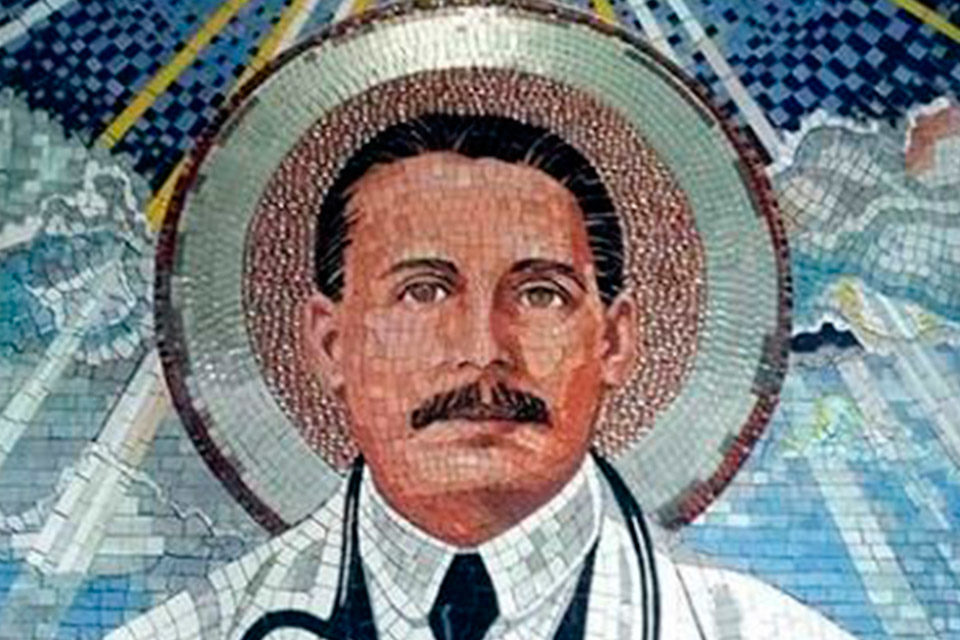
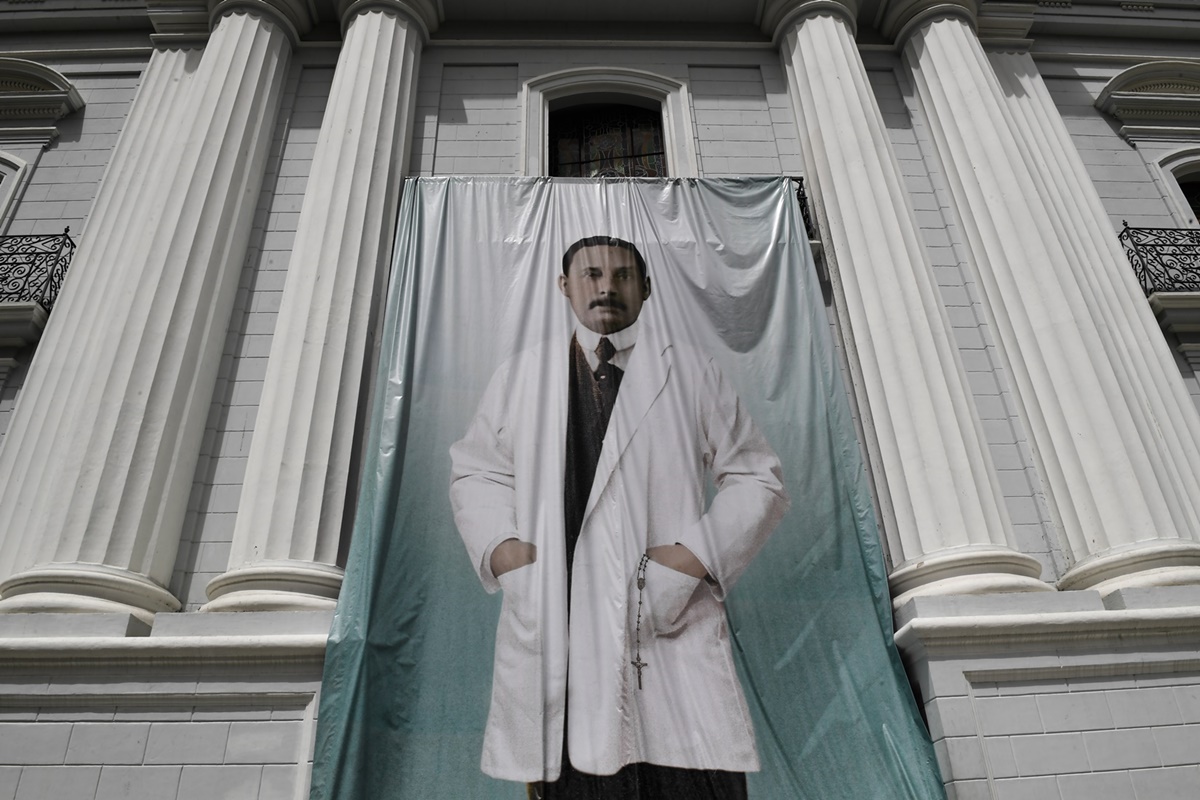
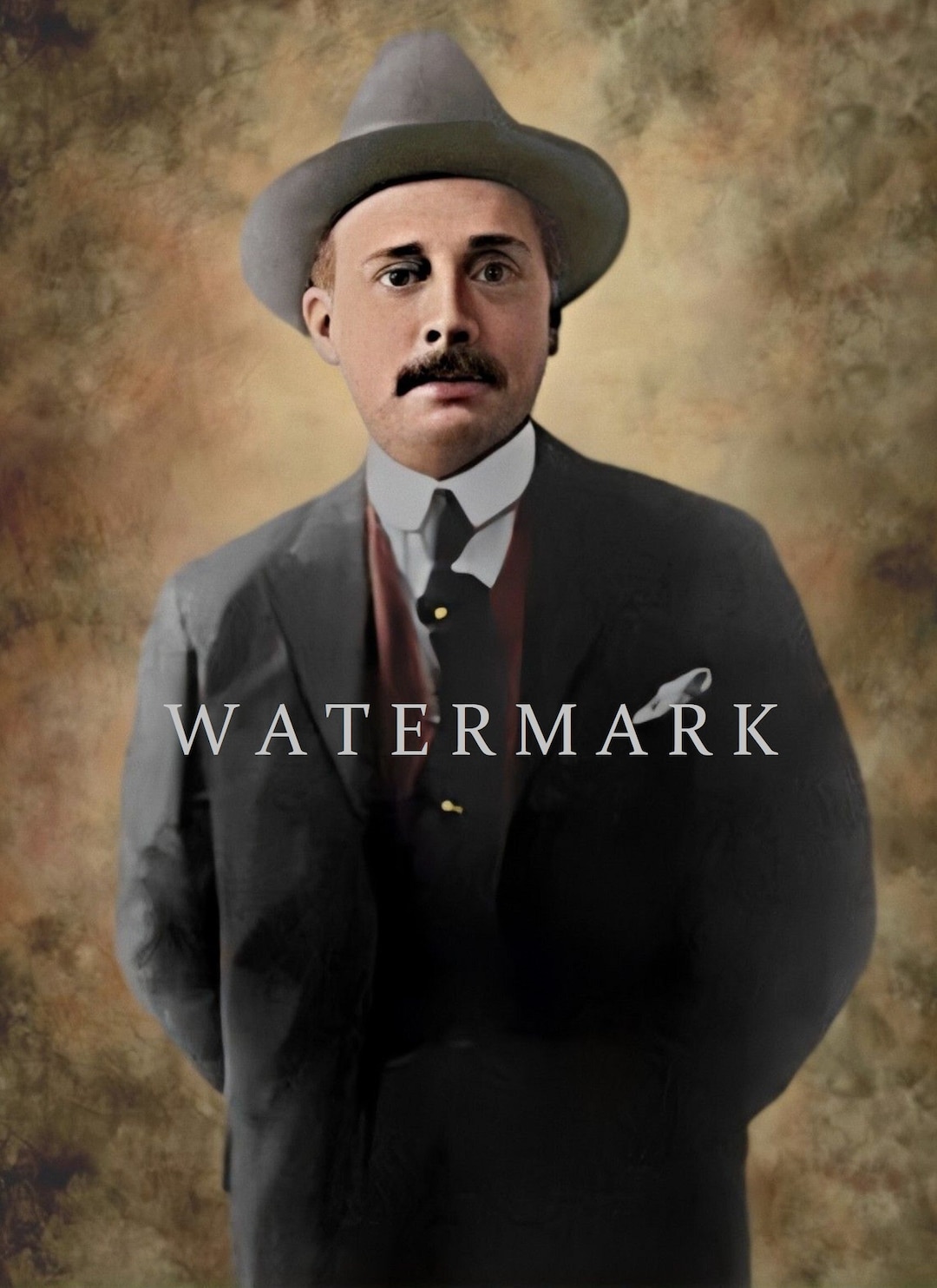
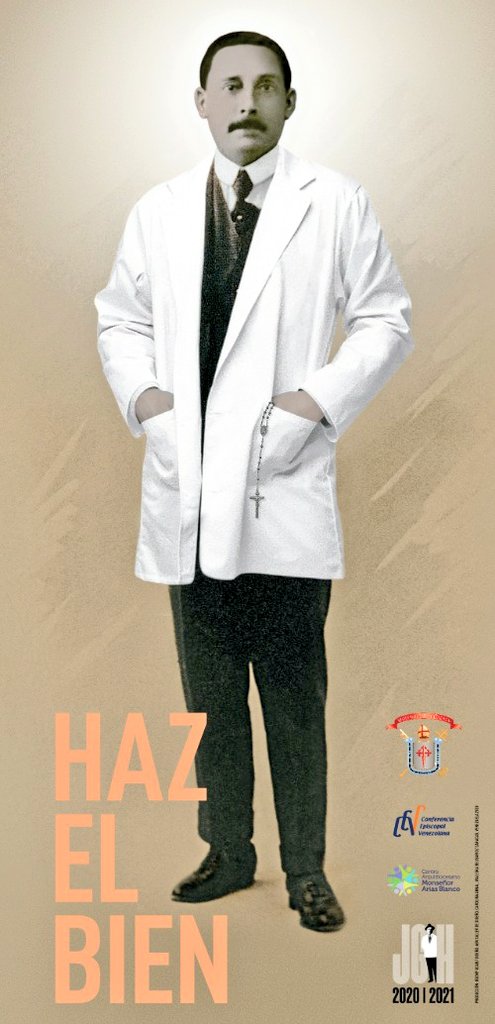
José Gregorio Hernández Cisneros OFS (Spanish: [xoˈse ɣɾeˈɣoɾjo eɾˈnandes]; 26 October 1864 – 29 June 1919) was a Venezuelan physician. Born in Isnotú, Trujillo State, he became a highly renowned doctor, more so after his death. He was beatified by the Catholic Church in 2021, and his canonization was announced in early 2025.
Early life and education
José Gregorio Hernández Cisneros was born on 26 October 1864 in Isnotú, a small village in the state of Trujillo in Venezuela.
He spent the entirety of his childhood in his hometown, where his mother worked as a housekeeper and his father sold pharmaceuticals and livestock. Hernández was baptised on 30 January 1865 in what is now the parish Church of Niño Jesús de Escuque. He received the sacrament of Confirmation on 6 December 1867 from Juan Bonet, Bishop of Mérida.
At the age of thirteen, José Gregorio told his parents of his desire to go to law school and become a lawyer, but was persuaded by his mother to pursue a career in medicine instead. So, in 1878, he set off on the long and difficult journey from the Andes Mountain Range in Trujillo to Caracas. He enrolled in Colegio Villegas, one of the country's most prestigious schools at the time, where, in 1882, he graduated with a baccalaureate in philosophy.
After completing his high school education, Hernández enrolled in the Central University of Venezuela in Caracas to begin his medical studies. Throughout his six years at the university, he was described by his professors as a student of outstanding academic performance and conduct.
Career
In 1888 Hernández graduated as a medical doctor at the Central University of Venezuela. The Venezuelan government awarded him a grant to continue his studies in Europe. Hernández traveled to Paris, where he studied other fields of medicine such as: bacteriology, pathology, microbiology, histology, and physiology. Following his return to Venezuela, he became a leading doctor at the Hospital José María Vargas.
Between 1891 and 1916, Hernández dedicated himself to teaching, to medicine, and to religious practice. He made two attempts to begin studies for the priesthood, but his fragile physical conditions would ultimately stand in his way. In 1908, he studied for ten months at the Monastery of Lucca in Italy. Then, in 1913, in a further attempt, he enrolled at the Pontifical Latin American College in Rome, but again for health problems obliged him to return to Venezuela. Hernández treated the poor for free and even bought them medicines with his own money. Among his scientific publications are The Elements of Bacteriology (1906), About the Angina Pectoris of Malaric Origin (1909) and The Elements of Philosophy (1912).
With the arrival in 1918 of the highly contagious Spanish flu in Venezuela, Hernández treated patients in Caracas who had caught it. Hernández died in 1919, after being struck by a motorist.
His major relics are venerated in the La Candelaria Catholic Church in Caracas.
Beatification
After his death, Hernández' fame began to spread. Claims were made around the country that miracles had been experienced in cases where his intercession before God had been invoked. Eventually, his name became known all over Latin America and Spain. His healing help is often invoked by both doctors and patients. He is also called upon for protection during overland journeys.
In 1949, Venezuelan Catholic Church officials began the process of determining whether or not Hernández was eligible for sainthood. In 1985 the Holy See granted him the title of Venerable. The next step in the process for Hernández was that of beatification.
On 26 August 2014, the Catholic Bishops Conference of Venezuela called on all Catholics to attend Mass and thank God "for the life and example of this great Venezuelan, with great hope and implore the grace of his speedy beatification" on the occasion of the 150th anniversary of Hernández' birth (Sunday, 26 October 2014).
In June 2020, Pope Francis decided in favor of the beatification of José Gregorio Hernández, after the recovery of a girl who had been shot in the head, had been recognized as a miracle attributed to him. The solemn proclamation was made at a Mass celebrated on 30 April 2021 in the church of the Collegio La Salle of Caracas by the apostolic nuncio Archbishop Aldo Giordano.
On 25 February 2025, Pope Francis announced that Hernández will be canonized.
Legacy
Blessed José Gregorio Hernández is also revered by Venezuela's alternative and syncretic religion, the cult of Maria Lionza. Historian Steven Palmer also has drawn parallels between the Hernández cult and that of the assassinated Costa Rican physician and politician Ricardo Moreno Cañas.
A private university in Maracaibo, Universidad Dr. José Gregorio Hernández (launched in 2003), is named for him. In 2011, Hernández' birthday, 26 October, was declared a "day of national celebration".
Hernández is also an important folk figure and is commonly portrayed in naïve art.
Publications
- 1893 - Sobre el número de glóbulos rojos. Gaceta Médica de Caracas.
- 1894 - Sobre angina de pecho de naturaleza paludosa. Gaceta Médica de Caracas.
- 1910 - Lecciones de bacteriología. Gaceta Médica de Caracas.
- 1910 - Lesiones anatomo–patológicas de la pulmonía simple o crupal. Gaceta Médica de Caracas.
- 1910 - De la nefritis a la fiebre amarilla. Gaceta Médica de Caracas.
- 1913 - Renuncia ante la Academia Nacional de Medicina. Gaceta Médica de Caracas.
- 1918 - Nota preliminar acerca del tratamiento de la tuberculosis por el aceite de Chaulmoogra. Gaceta Médica de Caracas.
- 1922 - Elementos de bacteriología. 2.ª edición: Caracas. El Cojo.
- 1959 - Elementos de filosofía. 3.ª edición: Caracas. Bibliográfica Venezolana.
- 1968 - Obras completas. Caracas. Universidad Central de Venezuela.
References
External links
- José Gregorio Hernández Biography
See also